
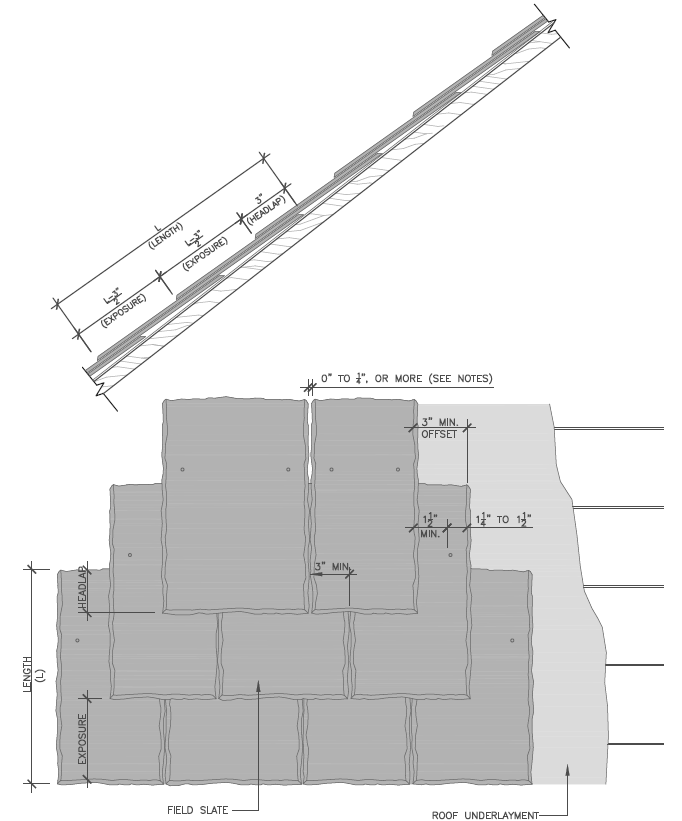
Field Slates of Random Widths:
Purpose: A random width slate roof utilizes slates in a variety of widths that maintain horizontal course lines and random vertical joint (bond) lines.
Jointing: Adjacent slates in a course may be laid tight or with a small gap +/- ¼” to enhance aesthetics, ensure adequate slate widths at details, or to accommodate 3” offset of vertical joints.
Materials: Slates ranging in width from ½ the slate’s length and up to 14” wide (e.g., 18” long x 9, 10, 11, 12 and 14” wide. A random width roof can consist of as little as two or as many as seven widths.
Details: Try to avoid using slates narrower than 6” at rakes and other details.
Layout: The field should be laid out to horizontal course chalk lines dictated by the appropriate exposed length of slates in each course. The minimum offset of 3 inches should be maintained as slates are laid in each course, while also minimizing the vertical alignment of joints with nearby slates in courses below.
Blending: The number of pieces of slate of each width available is used to determine the blend of widths used as the slate is installed. This serves to best utilize the slate available, while creating an aesthetically pleasing roof and avoiding repetitive patterns
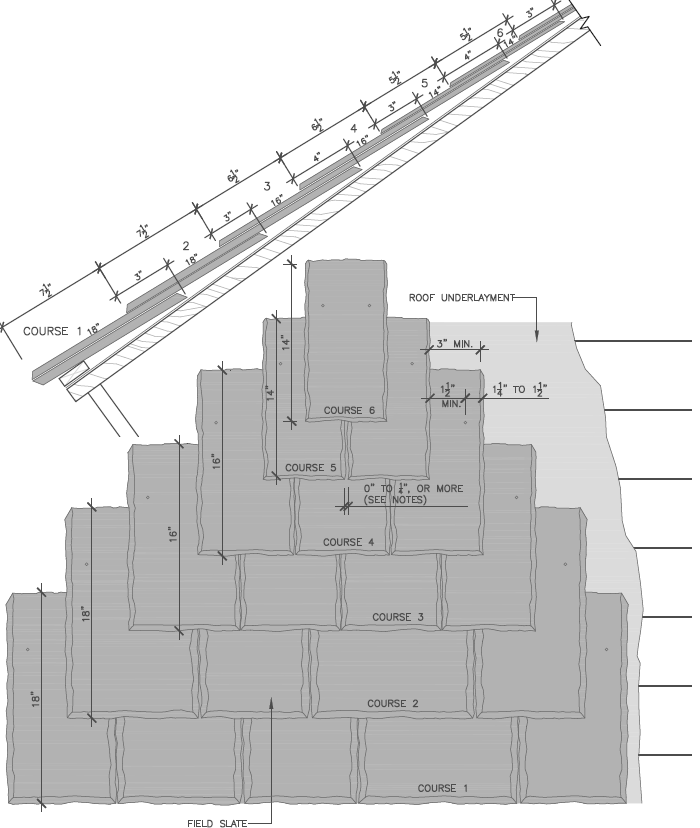
Graduated Field Slates:
Appearance: A graduated slate roof traditionally utilizes slates of a variety of sizes to create a roof of diminishing slate lengths, widths and thicknesses. Courses of longer/thicker/wider slates are installed at the eaves, with shorter/thinner/narrower slates placed in courses as installation progresses up slope.
Jointing: Adjacent slates in a course may be laid tight or with a small gap (approx +/- ¼”) to enhance aesthetics, ensure adequate slate widths at details, or to accommodate alignment of vertical bond lines.
Materials: Depending on roof size and design, slates in three or more consecutive lengths and of random widths are employed. Thicknesses can commonly range from 1” to 1/4” in at least three standard thickness graduations.
Details: Try to avoid using slates narrower than 6” at rakes and other details
Layout: The field should be laid out to horizontal course lines in the number of courses as determined by the available quantity of each length and thickness of slate.3-inch minimum offset should be maintained as slates are laid in each course, while also minimizing the vertical alignment of joints with nearby slates in courses below.
Blending: The number of pieces of slate of each length, width and thickness delivered to the site is used to determine the roof layout and the blend of sizes used as slate is installed. This serves to best utilize the slate available, while creating an aesthetically pleasing roof and avoiding repetitive patterns.