
A slate roof is a specialty roofing system made from natural stone that is quarried, cut, and shaped into shingles. Known for its exceptional longevity, slate is widely regarded as one of the most durable roofing materials available, often lasting 75 to over 100 years when properly installed. Its natural density makes it highly resistant to water absorption, fire, and extreme weather conditions. In addition to its strength, slate offers a timeless, elegant appearance that enhances architectural character. With minimal maintenance requirements and unmatched lifespan, slate roofing remains a top choice for those seeking long-term performance and lasting value.
Types of Slate Roofing
Standard slate shingles from North Country Slate are typically 1/4″-3/8″ thick and uniform in size. For more textured applications, heavy slates (up to 1″ or 2” thick) offer increased durability and a rugged profile. Quarry location and geology origin from high-quality deposits in Vermont, New York and Quebec, Canada determines the slate’s chemical composition, which dictates its weather resistance and overall longevity.
Standard vs. Graduated Slate Roofing
The aesthetics of a natural slate roof depend on the layout:
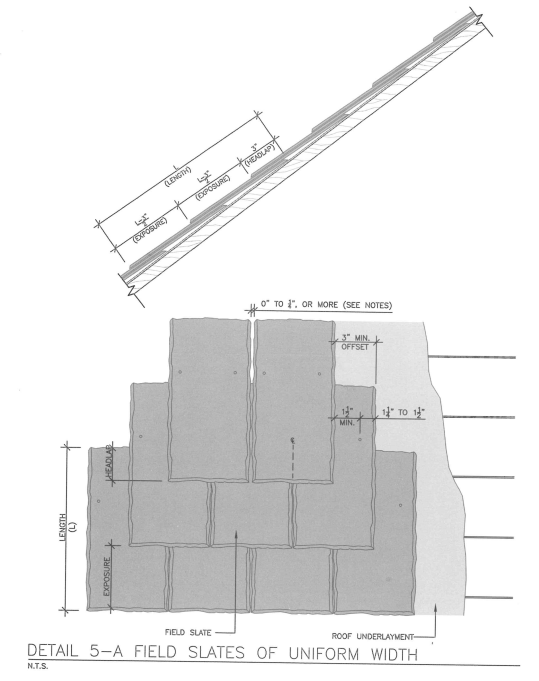
- Standard Slate: Uses tiles of uniform length and width, creating a clean, symmetrical, and traditional look.
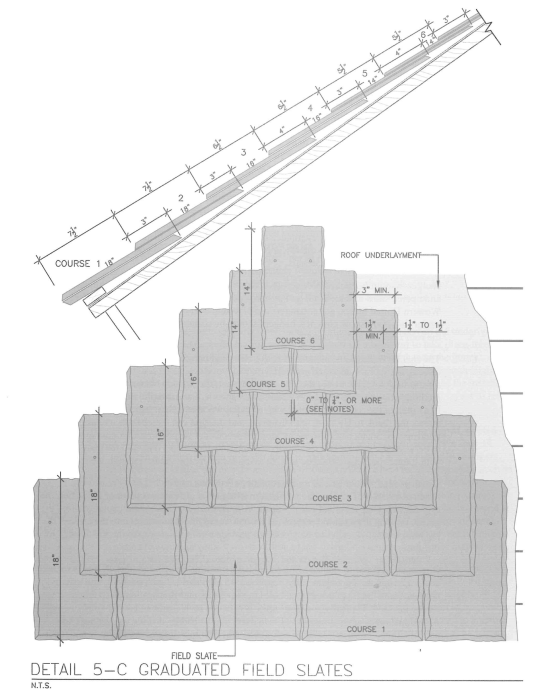
- Graduated Slate: Graduated slate roofs use slates of varying thicknesses and sizes. Graduated systems take this further, placing the largest, thickest slates at the eaves and decreasing size toward the ridge to create an illusion of depth.
Color Weathering Variations in Slate Roofing
Slate colors are categorized as Unfading or Weathering. Unfading slates are most likely to maintain their original color overtime. Weathering slates contain minerals that oxidize, shifting from grey or green to earthy tones of buff and brown over time. Architects often mix these to create a variegated palette that adds character as the building ages and is exposed to the elements.
Select up to 3 slate colors for a side by side comparison of their natural color range.

Slate Roof Pros and Cons
Why choose natural slate shingles over synthetic (plastic), asphalt, metal or other roofing materials on the market today? Slate is one of the oldest types of roofing materials that is still used to this day. There are many reasons why architects, homeowners, roofing contractors or builders continue to choose natural slate roofing over any other roofing material, including its longevity, sustainability, and durability. Let’s explore some of the reasons why natural slate may or may not be the best choice for your next roofing project.
Natural slate shingles are often called the “forever roof,” offering unparalleled longevity and aesthetic appeal.
Before Installing Slate
- Cost: Slate can be one of the more expensive options when it comes to selecting roofing materials
- Structural Requirements: Slate is heavier than most other roofing products. Some roofs may require structural reinforcement to support the weight. Lightweight slate roofing systems are available from North Country Slate.
- Specialized Installation: A professional roofing contractor who has experience working with slate is recommended for slate roofing projects
Natural Slate vs. Clay Tile vs. Synthetic Roofing Material
| Criteria | North Country Natural Slate | Ludowici Clay Tile | Synthetic Roofing Material (Plastic) |
|---|---|---|---|
| Warranty | 75 Years | 75 Years | 10 - 30 Years, color not covered |
| Average Lifespan | 75+ Years | 75+ Years | Unknown |
| General Attributes | Traditional, Durable, Longest lifespan, readily available from stock, eco-friendly, natural product | Warranty includes color, decorative product, highly customizable, 100% made in USA, many profiles available | Newest roofing material on the market, lifespan is unknown, prone to warping and fading, warranties have limitations, installation is limited to climate conditions |
| Available Colors | Black, Greens, Grays, Red, Purples & Mottled Varieties | 50 Standard plus custom color development | Varies by manufacturer |
| Color Last | Available in both Unfading & Semi-Weathering natural weathering characteristics | Extensively Customizable (clay tiles can be glazed to suit desired look) | Color not warrantied and prone to fading due to exposure to elements |
| Customizable | Yes | Yes | No |
| Maintenance | Minimal to None | Minimal to None | Routine Roof Maintenance Required |
| Installation Restrictions | None | None | Warranty void if installed in temperatatures below 32F (0C) |
| Weight per Square | Varies (Lightweight options available) | Varies (Lightweight options available) | Varies by manufacturer |
| Lead Times | Available from stock | Varies (some quick ship stock options available) | Varies by manufacturer |
| Made in North America | Exclusively | Exclusively | Not Always |
| Fire Resistant | Yes (Class A) | Yes (Class A) | Varies by manufacturer |
| Water Absorption Rate | 0.25% or less (ASTM S-1 Rated) | <1% (ASTM Grade 1) | <4% |
| Hail Impact Rating | Class 3 & 4 | Class 3 & 4 | Class 1 to 4 |
| Environmentally Safe | Yes (100% Natural Product) | Yes (Possible Color Glazing Applied) | No (Plastic) |
Basic Practice for Nails and Nailing
Nailing: Set the nail in the countersink on the top surface of the slate. Do not over-nail or under-nail. Slate shingles must hang on their nails.
Special Consideration: Gypsum and Concrete Roof Decks: Use smooth shank nails, not ring shank. Stainless steel nails may be needed to avoid bending.
Nails: 11-gauge, smooth shank, copper wire slating nails are used most frequently
Special Consideration: Use 10-gauge nails for larger slates, hardwood roof decks, and where longer nails are required (e.g., hips)
Number of Nails: Use 2 nails per slate
Special Consideration: 4 Nails: Use 4 nails per slate for slates measuring ≤ ¾” in thickness and ≥ 20” in length. Place the 2 additional nails 2” above the regular nail holes
Nail Length: Generally twice the thickness of the slate plus 1”
Special Consideration: Flashings: Do not nail slate through flashings. Move the slating nails up, place one nail above one nail above the other on one side of the slate, or use copper wires secured to the roof deck upslope of the flashing.
Average Lifespan
A properly installed slate roof typically lasts 75 to 150 years, with some European heritage sites boasting slate roofs over three centuries old. Unlike synthetic materials that degrade quickly when exposed to the elements, slate remains chemically stable, refusing to rot or burn.
Factors Affecting Durability
While the stone itself is nearly indestructible, the system’s durability relies on three pillars:
- Installation Quality: A long-lasting slate roof relies heavily on proper execution, not excluding the hardware. Using non-corroding, high-quality copper or stainless steel nails is critical; if the fasteners rust away, the slate will slip regardless of the stone’s condition. Quality also depends on maintaining the correct headlap (the overlap of tiles) and proper handling of the slates.
- Climate: Natural slate can withstand freeze-thaw cycles and extreme weather conditions
- Maintenance: Maintenance is minimal. It primarily involves annual inspections to replace any individual cracked tiles and ensuring gutters are clear. Because slate doesn’t support organic growth like moss or algae as easily as wood or asphalt, it requires very little chemical intervention to stay pristine